
What Is Dancheong? A Complete Guide to Korea's Traditional Painted Architecture (단청)
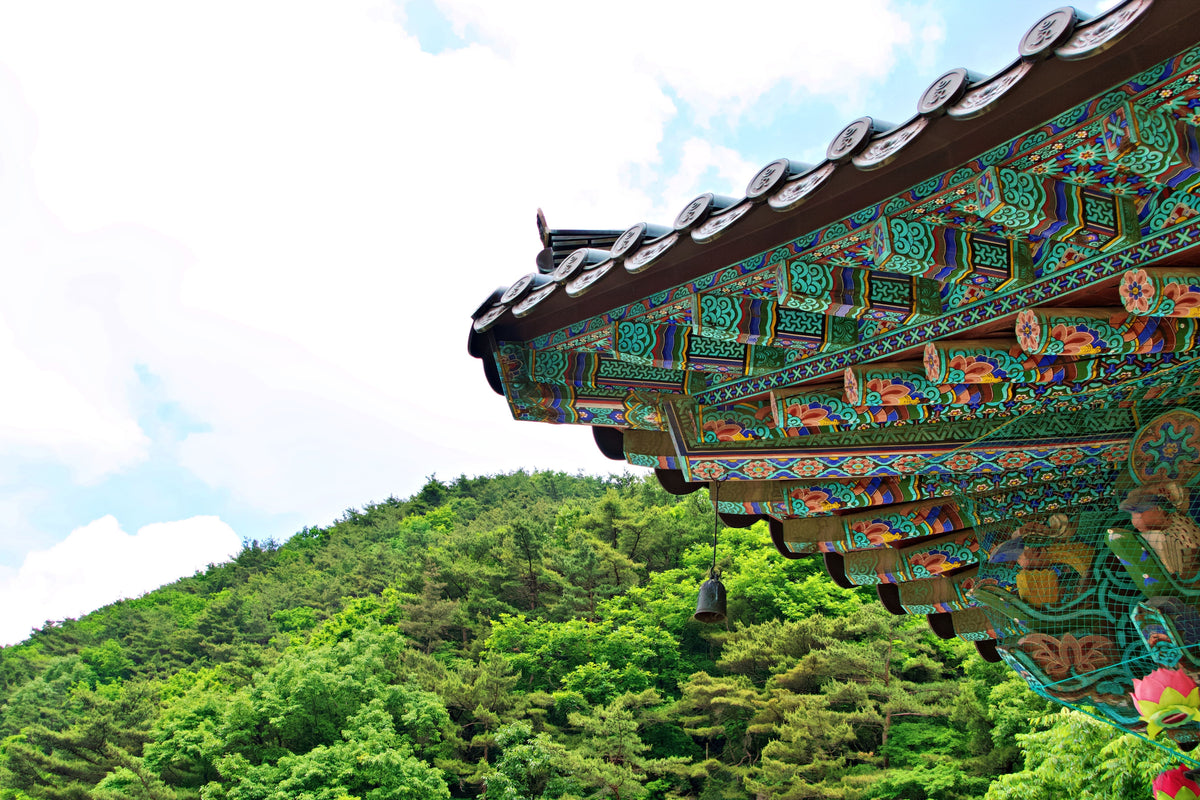
Quick Definition
Dancheong (단청) — literally “cinnabar and blue-green” — is the traditional Korean system of decorative painting applied to the wooden surfaces of palaces, temples, and ceremonial buildings. Far more than decoration, dancheong is rooted in the Obangsaek five-color philosophy of Yin-Yang and Five Elements, serves a functional protective purpose for the timber structure, and has been practised continuously since at least 357 AD.
If you have ever visited a traditional Korean palace or Buddhist temple, you have likely been captivated by the vivid, intricate patterns painting the undersides of the wooden roofs. These are not merely beautiful — they are among the most technically sophisticated painted surfaces in East Asian architectural history.
What Is Dancheong and What Does It Mean?
Dancheong (단청) refers to the traditional Korean decorative coloring applied to wooden buildings and artifacts. The name translates directly as “red and blue-green,” naming the two dominant pigments — but dancheong as a complete system draws on the full five-color palette of Obangsaek (오방색): blue/green (East), white (West), red (South), black (North), and yellow (Centre).
These colors follow the principles of Yin-Yang (음양) and Five Elements (오행) philosophy, representing a desire for peace, stability, protection, and continuity. Each color carries a specific energy:
| Color | Direction | Meaning in Dancheong |
|---|---|---|
| Blue/Green (청) | East | Peace, growth, the arrival of spring |
| Red (적) | South | Life, vitality, protection from evil |
| Yellow (황) | Centre | Earth, the emperor, sacred authority |
| White (백) | West | Purity, clarity, autumn |
| Black (흑) | North | Wisdom, protection, depth of knowledge |
Beauty with a practical purpose. Beyond philosophy, dancheong serves a vital structural function. Applying mineral-based pigments to wooden beams protects the timber against temperature changes, wind, rain, and insect damage — significantly prolonging the lifespan of the architecture. It was also used to conceal the natural flaws and grain variations in the building materials.
▶ Watch: Dancheong Workshop Seoul
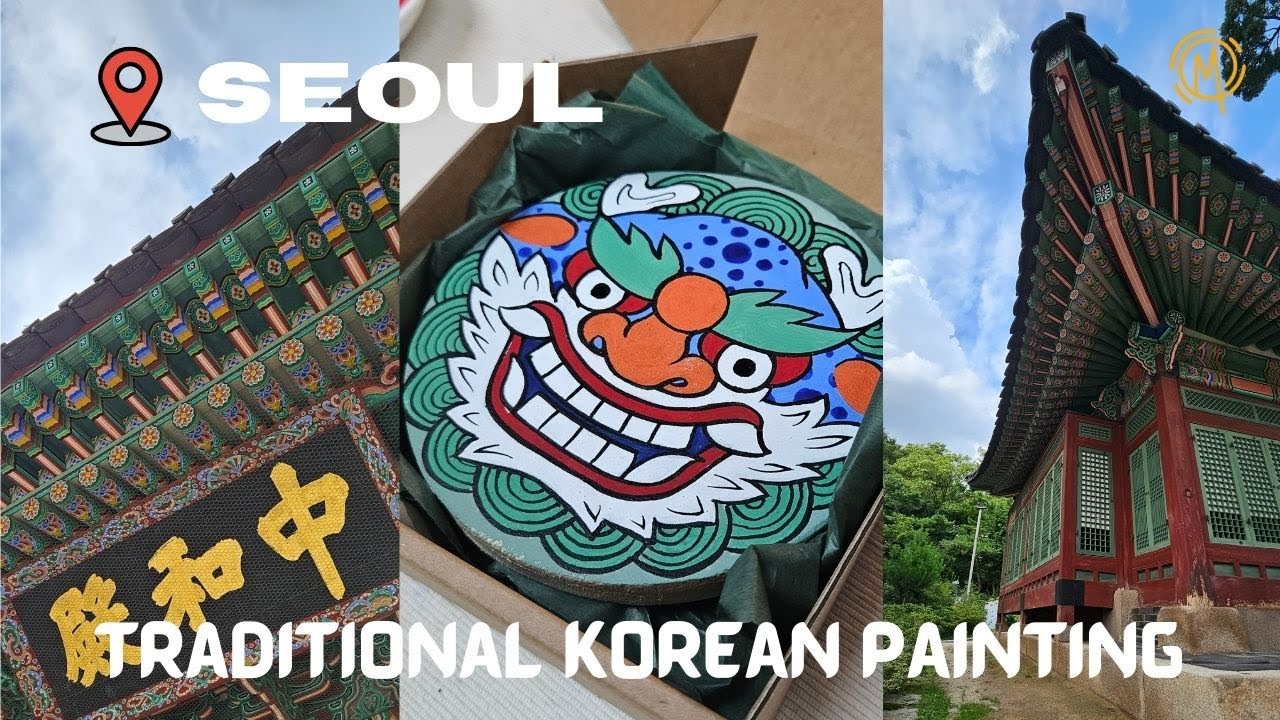
Inside a Dancheong workshop in Seoul — the master craftspeople keeping a 1,600-year tradition alive (YouTube)
A History Spanning 1,600 Years
The Origins — Three Kingdoms Era (삼국시대). The earliest known examples of dancheong were discovered in Goguryeo (고구려) tomb murals dating to 357 AD. These ancient paintings depicted architectural elements — pillars, brackets, vine patterns, silk motifs — in a colorful graphic style that would define dancheong for the following fifteen centuries.
Silla and Goryeo Dynasties. During the Silla period, dancheong was so widespread that it decorated even commoners’ homes. By the 12th century in the Goryeo dynasty, the art form reached luxurious heights — handrails painted in bright reds, decorated with elegant vine flowers, and applied across an increasingly sophisticated architectural vocabulary.
The Joseon Dynasty (조선) — Peak Diversity. Dancheong reached its greatest variety and sophistication during the Joseon era (1392–1897). Artisans established green as a standard background color, layering elaborate and highly contrasting patterns. Buddhist symbolism became deeply embedded — the lotus flower, representing purity and creation, became one of the most recurring motifs.
▶ Dancheong at Deoksugung Palace
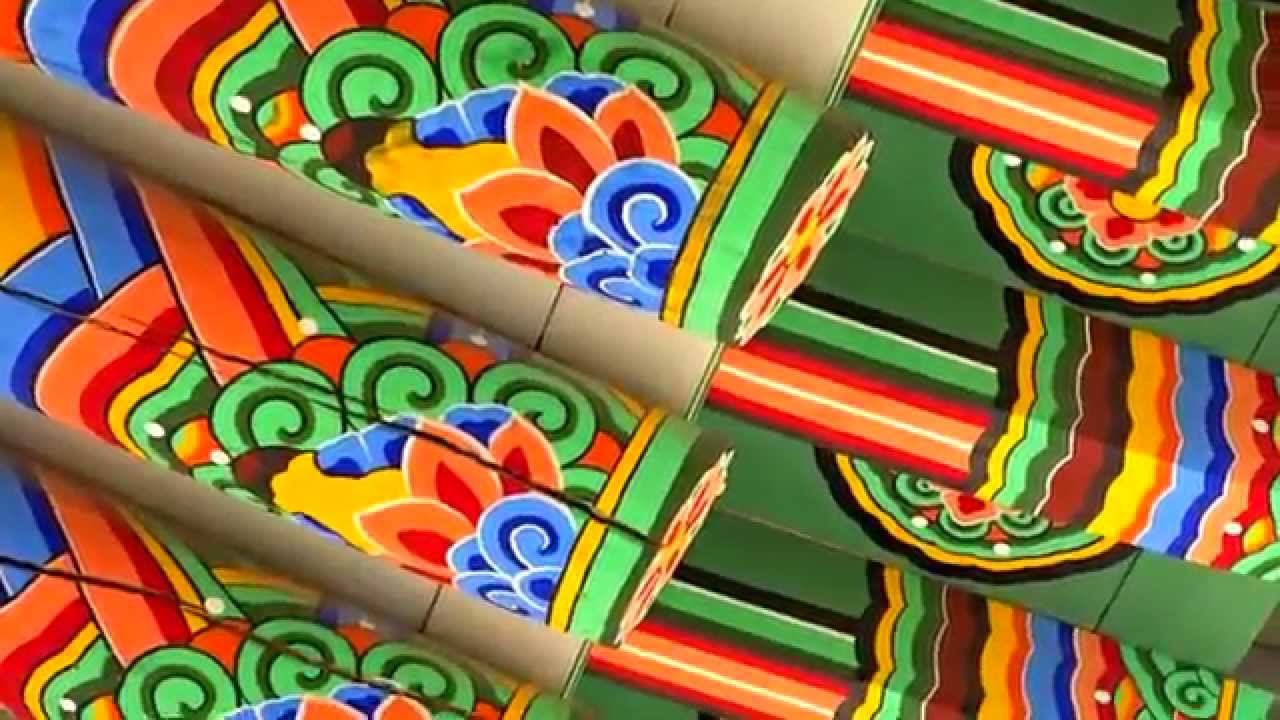
Dancheong patterns on Deoksugung Palace in Seoul — 600 years of preserved royal architecture (YouTube)
Dancheong in Modern Design and Fashion
Today, dancheong extends far beyond temple eaves. Its intricate geometric forms — triangles, circles, squares, hexagons, and elaborate floral motifs — are experiencing a modern renaissance in fashion and product design.
Contemporary Clothing and Embroidery. Using textile CAD systems, designers have extracted the geometric elements of traditional dancheong and transformed them into over 30 modern computer embroidery patterns. Applied to sheer voile fabrics, these patterns produce a line of spring and summer blouses that combine cooling and UV-blocking properties with a distinctly Korean aesthetic. The ancient motifs, simplified and restaged, prove that dancheong is as visually alive in 2024 as it was in 357 AD.
Everyday Accessories and Homeware. The striking color palettes and balanced proportions of dancheong are also influencing modern lifestyle products — bags, mufflers, interior decor, ceramics, and textiles. PEUM’s own curation draws on this same principle: that traditional Korean aesthetic systems carry design intelligence that remains entirely relevant today.

▶ Korean Temple Art and Motifs
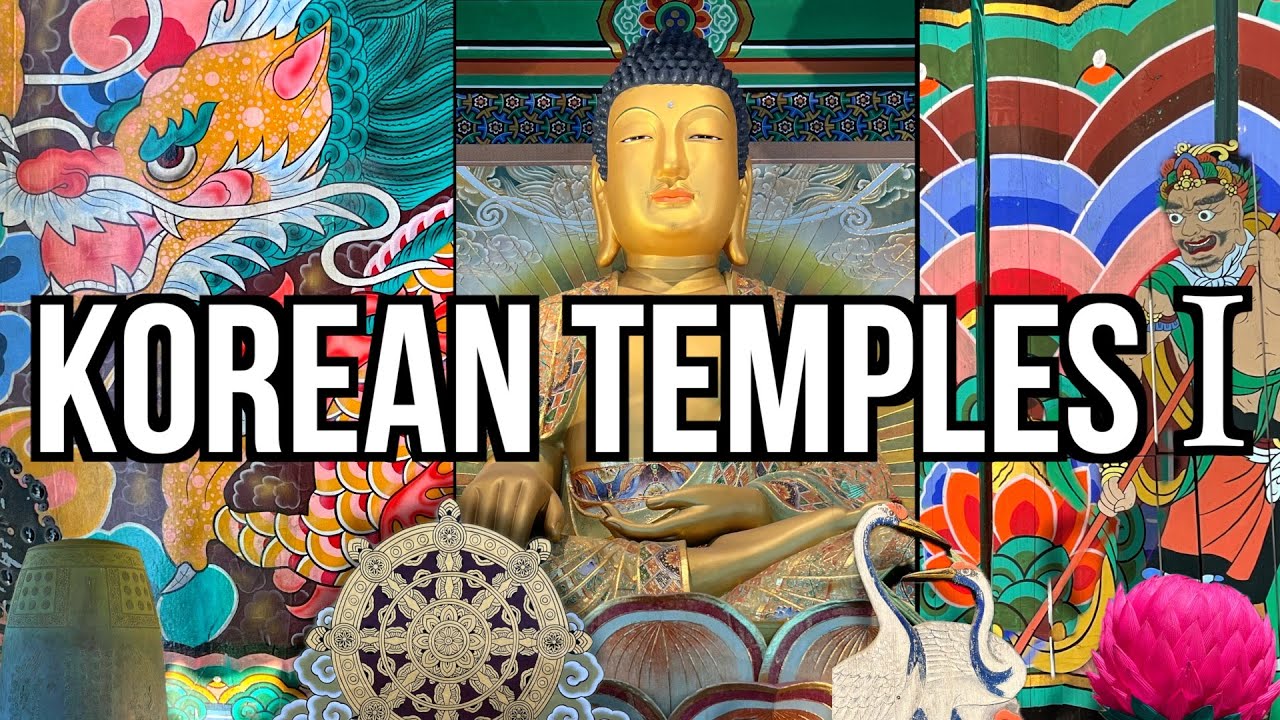
Korean Temple Art Motifs — how Buddhism shaped dancheong iconography and the language of Korean sacred space (YouTube)
Frequently Asked Questions About Dancheong
What is dancheong (단청)?
Dancheong is the traditional Korean system of decorative painting applied to wooden architectural surfaces — beams, eaves, columns, and brackets of palaces, temples, and ceremonial halls. It combines aesthetic beauty with structural function (protecting timber from weather and insects) and deep philosophical symbolism drawn from Obangsaek five-color theory.
How old is dancheong?
The earliest known dancheong examples date to 357 AD, found in Goguryeo tomb murals. The tradition has been practised continuously for over 1,600 years, with significant developments through the Silla, Goryeo, and Joseon dynasties.
What are the five colors of dancheong?
Dancheong uses the Obangsaek (오방색) five-color system: blue/green (east, peace), red (south, life and protection), yellow (centre, sacred authority), white (west, purity), and black (north, wisdom). These are mineral-based pigments that were traditionally derived from natural sources — azurite, malachite, vermillion, lead white, and carbon black.
What does dancheong symbolise?
Beyond color, dancheong patterns carry specific symbolic content. Lotus flowers represent Buddhist purity and spiritual rebirth. Clouds signal heaven and divine blessing. The taegeuk (yin-yang spiral) reflects cosmic balance. Geometric interlocking patterns indicate eternity and the cyclical nature of existence.
Is dancheong found only in Korea?
Dancheong is specifically Korean — a distinct tradition that, while sharing roots with broader East Asian architectural painting practices, has its own aesthetic vocabulary, color rules, and philosophical underpinning. Chinese caisson ceilings and Japanese temple painting differ significantly in geometry, palette, and iconographic content.
Where can I see dancheong in Korea?
The best places to see dancheong in Korea are Gyeongbokgung Palace (Seoul), Changdeokgung Palace (Seoul), Bulguksa Temple (Gyeongju), Haeinsa Temple (South Gyeongsang), and Jogyesa Temple (Seoul, the head temple of Korean Buddhism). Most major Buddhist temples and Joseon-era palaces preserve dancheong in various states of restoration.
Explore Korean Heritage at Home
PEUM brings carefully curated Korean homeware to Australian homes — objects that carry the same depth of craft and cultural meaning as the traditions in this article.
Shop PEUM