
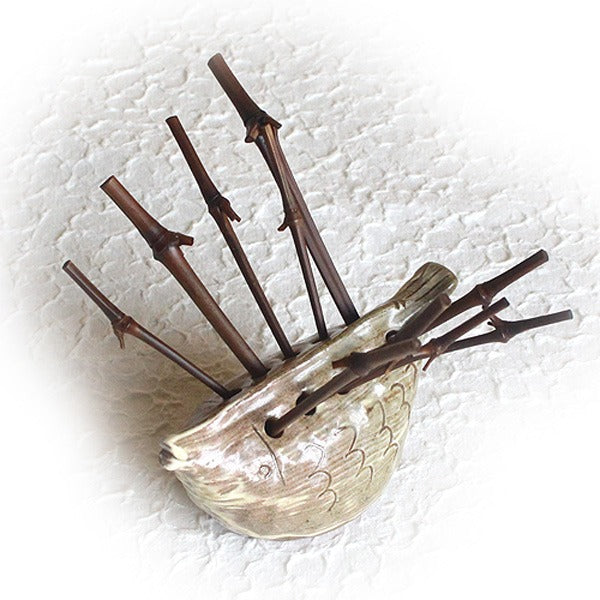
Buncheong Fish Fork Caddy Set - Beige
Shaped with a maker's heart, it finds new meaning in your everyday.
A quiet piece of Korea, brought into life in Australia.
Specifications
Materials
Artisan Info
Care Instructions
Please Note
Shipping & Returns
Ships directly from South Korea to Australia
Delivery 5–14 business days (incl. 1–3 days processing),
depending on destination & customs clearance
Made-to-Order Some items need up to 2 extra weeks
— noted on product page
Shipping Fees (shown in your local currency)
- Orders AUD 200 and over → Complimentary shipping 🎁
- Orders under AUD 200 → Flat rate AUD 30
📦 No PO Boxes or Parcel Lockers · Tracking emailed on dispatch
International orders may incur customs duties
It's the kind of thing guests notice before they know why — a small ceramic cylinder on the table, a fish swimming across its surface.
Buncheong (분청) ceramics emerged in Korea during the transition between the Goryeo and Joseon dynasties — a period when ceramics moved away from aristocratic formality toward a freer, more human expression. The fish motif painted on this fork caddy sits squarely in that tradition: bold, unhurried, and entirely unafraid of imperfection. The hand-painted fish (물고기) is a symbol of abundance and good fortune in Korean folk art, and here it appears not on a museum wall but on an object you pick up with your hands every day. The beige glaze ground and loose brushwork make every caddy different — there are no two the same. PEUM presents this as Korean folk ceramic craft in its most direct form: useful, beautiful, and entirely itself.
Sit it at the centre of an afternoon fruit board alongside a wooden cutting board, small ceramic dishes, and fresh seasonal fruit. Use it at a dinner party table in place of a conventional utensil holder — the fish motif becomes a conversation piece without trying. Keep it on a kitchen shelf with small bamboo skewers for tapas nights — the buncheong glaze holds its own against any background.
Functional art for the kitchen, wrapped in a ceramic tradition that is centuries old. The bamboo forks make it immediately useful; the craft makes it worth keeping. Made in South Korea by Tovy. Each holder is individually hand-painted — the fish swims a little differently on every piece.
Thank you for visiting PEUM.
At PEUM, we’re passionate about sharing the beauty and soul of Korean artisan craftsmanship with the world.
Each item is thoughtfully handled and carefully packed by hands that respect the story behind every piece so that it reaches your home just as it was meant to be.
We’re a small, independent team that believes in doing things properly with care, with purpose, and with heart.
No shortcuts, no compromises
just genuine dedication to bringing you something special, the way it deserves to be delivered.
With warmth,
PEUM을 찾아주셔서 진심으로 감사드립니다.