
What Is Joseon Baekja? A Complete Guide to Korea's White Porcelain and Moon Jars
Quick Definition
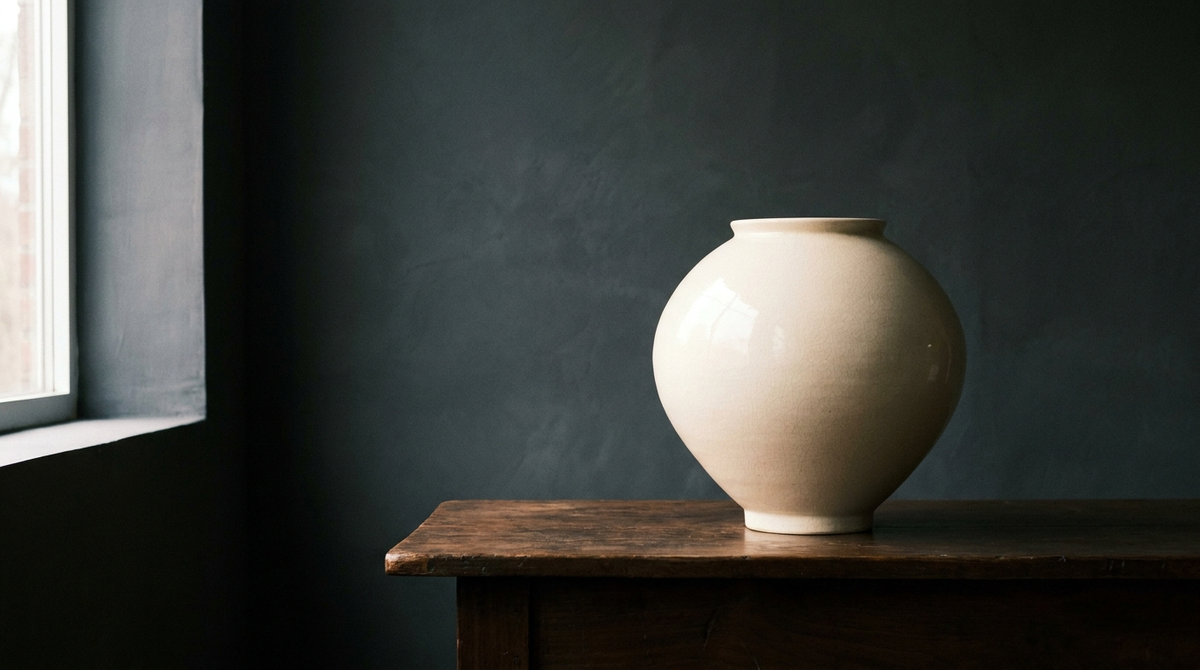
Joseon Baekja (조선백자) is traditional Korean white porcelain produced during the Joseon Dynasty (1392–1897). Made from pure white clay (백토) fired at 1,300–1,350°C in a reduction atmosphere, Baekja is defined by its restrained, undecorated beauty — an expression of Neo-Confucian ideals of simplicity, purity, and intellectual integrity. Its most celebrated form is the Moon Jar (달항아리), a large imperfect sphere that has become one of the most recognised symbols of Korean aesthetics worldwide.
Have you ever seen a simple white ceramic that just resonates? That is the feeling people consistently describe when encountering Joseon Baekja. Far from being merely plain, these ceramics carry centuries of philosophy, craftsmanship, and cultural meaning — and their value is only growing. Moon Jars have fetched over 3 billion Korean won at auction. The V&A Museum, the Metropolitan Museum of Art, and the National Museum of Korea hold them as centrepieces of their permanent collections.
What Makes Baekja Unique?
Baekja is a type of jagi (자기) — high-fired Korean porcelain. What sets it apart from Chinese or Japanese porcelain is not technical complexity but deliberate restraint. Where Chinese porcelain added elaborate decoration and Japanese ceramics made imperfection an aesthetic statement, Korean Baekja accepted simplicity as its highest form.
The clay used — pure white baekto (백토) — is covered with a clear, transparent glaze, then fired in a reduction kiln at 1,300–1,350°C. This process vitrifies the clay, creating an extremely hard, dense surface. The resulting colour varies depending on clay composition and firing conditions:
| Korean Name | Description | Character |
|---|---|---|
| 설백색 Seolbaeksaek | Snow white | Purest, most prized — royal use |
| 유백색 Yubaeksaek | Milky white | Warm, soft — common in daily wares |
| 청백색 Cheongbaeksaek | Bluish white | Cool, refined — prized in middle Joseon |

▶ The Baekja Story
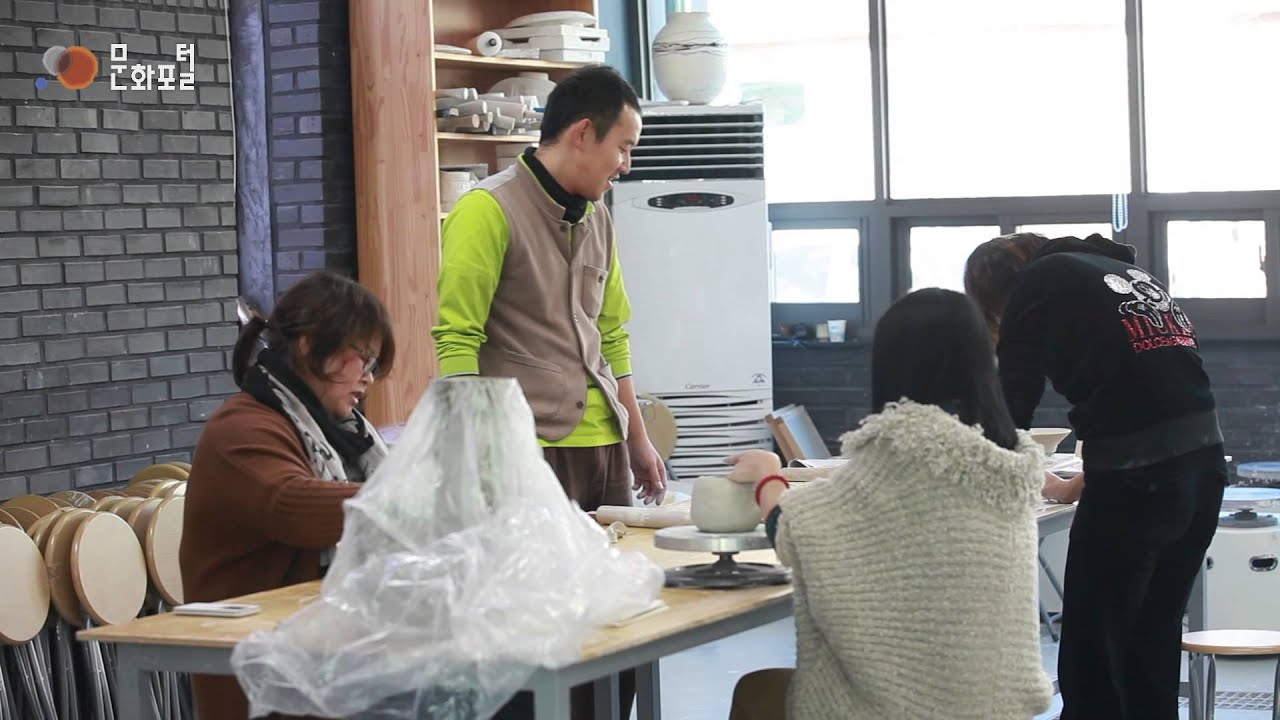
Korean Culture: The Baekja white porcelain story — the aesthetics of pure-white integrity (YouTube)
The Moon Jar (달항아리): Korea’s Most Iconic Vessel
Of all Baekja forms, the Moon Jar (달항아리) — formally called Baekja Daeho (백자대호) — is the most celebrated. Named for its resemblance to a full moon, Moon Jars are large round vessels, at least 40cm in both width and height, made by throwing the upper and lower halves separately on a wheel and joining them at the centre.
This joining process is the source of the Moon Jar’s defining quality: inherent asymmetry. No two are identical. The seam creates a slight irregularity, the clay settles differently in the kiln, and the result is a form that looks different from every angle — what Korean art critic Choi Sun-u called “awkwardly formed roundness.” This is not a flaw. It is the work.
Fewer than 20 authentic Joseon Moon Jars exist worldwide. Seven are designated National Treasures of South Korea. Others are held at the British Museum, the V&A, and in private collections where they have sold at auction for extraordinary sums.

“I am taking happiness with me.”— Bernard Leach, British master potter, upon first encountering a Moon Jar in 1935
A History in Three Acts: Early, Middle, and Late Joseon
Early Joseon (1392–1650). White porcelain production for the royal court was concentrated at official state kilns called Gwan-yo (관요), located in Gwangju, Gyeonggi Province. Pieces were fired in protective clay containers called gap (갑) to prevent ash and flame from marking the surface. Forms were round, generous, and dignified — reflecting early Joseon Confucian ideals. Pure white, undecorated Sunbaekja (순백자) was the most valued form.
Middle Joseon (1651–1751). Baekja developed a subtle bluish tint — Cheongbaeksaek. Shapes became more refined and slightly angular, developing a distinctly Korean character. Decoration diversified: underglaze cobalt blue (Cheonghwa 청화백자), underglaze iron brown (Cheolhwa 철화백자), and underglaze copper red (Jinsa 진사백자) all emerged in this period.
Late Joseon (1752–1897). The range of forms and decoration expanded significantly. Folk painting motifs — cranes, dragons, tigers, pine trees — appeared on vessels. Cobalt blue decoration became widespread as domestic sources of cobalt were developed.
▶ Exhibition
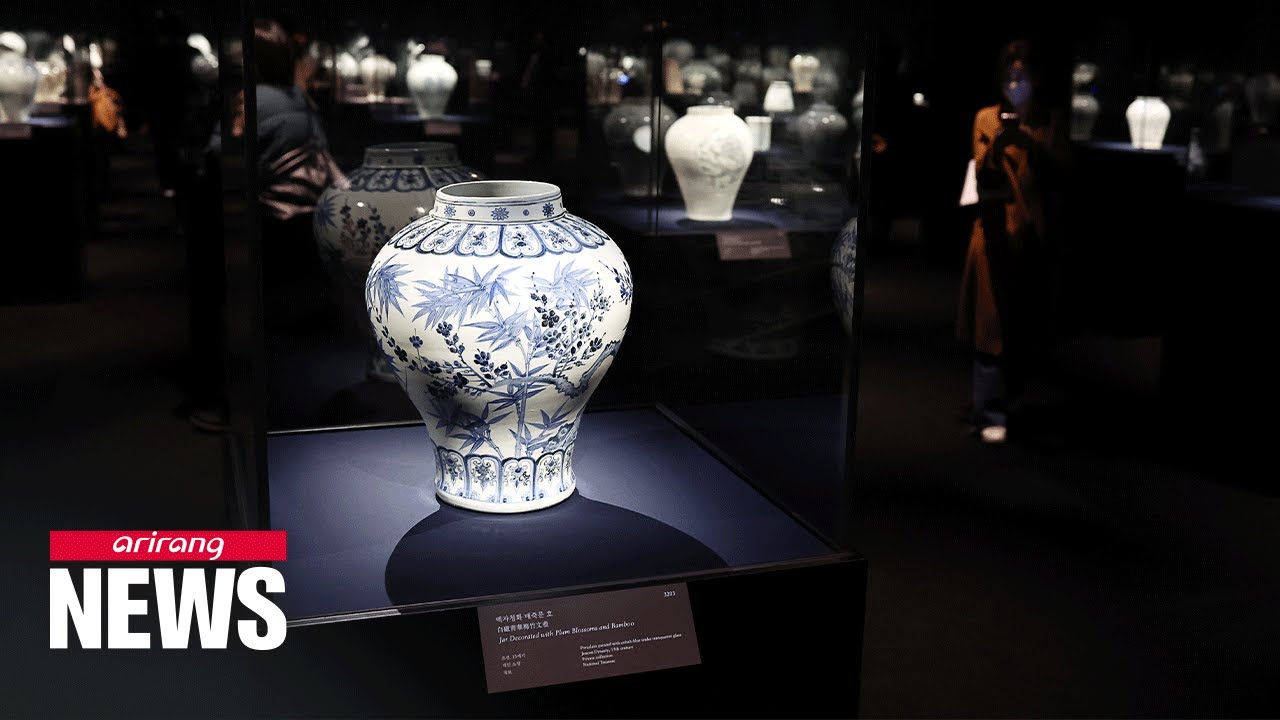
‘Unprecedented’ collection of Joseon Dynasty white porcelain open to the public at Leeum Museum, Seoul (YouTube)
Admired Across Cultures
Korean abstract master Kim Hwan-ki (김환기) featured Baekja vessels throughout his paintings, describing their “tactile warmth.” Art historian Michael R. Cunningham called the Moon Jar “incomparably Korean” — embodying unpretentiousness, firmness, and a voice that needs no decoration to be heard. British potter Bernard Leach famously said he was “taking happiness” with him after encountering a Moon Jar in 1935. Even actress Judi Dench has spoken publicly about the peace she felt in the presence of a modern Dalhangari.
The Moon Jar’s cultural reach extended to the 2018 Pyeongchang Winter Olympics, where the iconic Olympic cauldron was designed as a direct tribute to the Moon Jar form — a vessel of pure white porcelain elevated to a symbol of Korea presented to the entire world.

What these responses share is not enthusiasm for technical complexity. They are responses to simplicity — to an object that has removed everything unnecessary and left only what is essential.
▶ Korean Culture Series
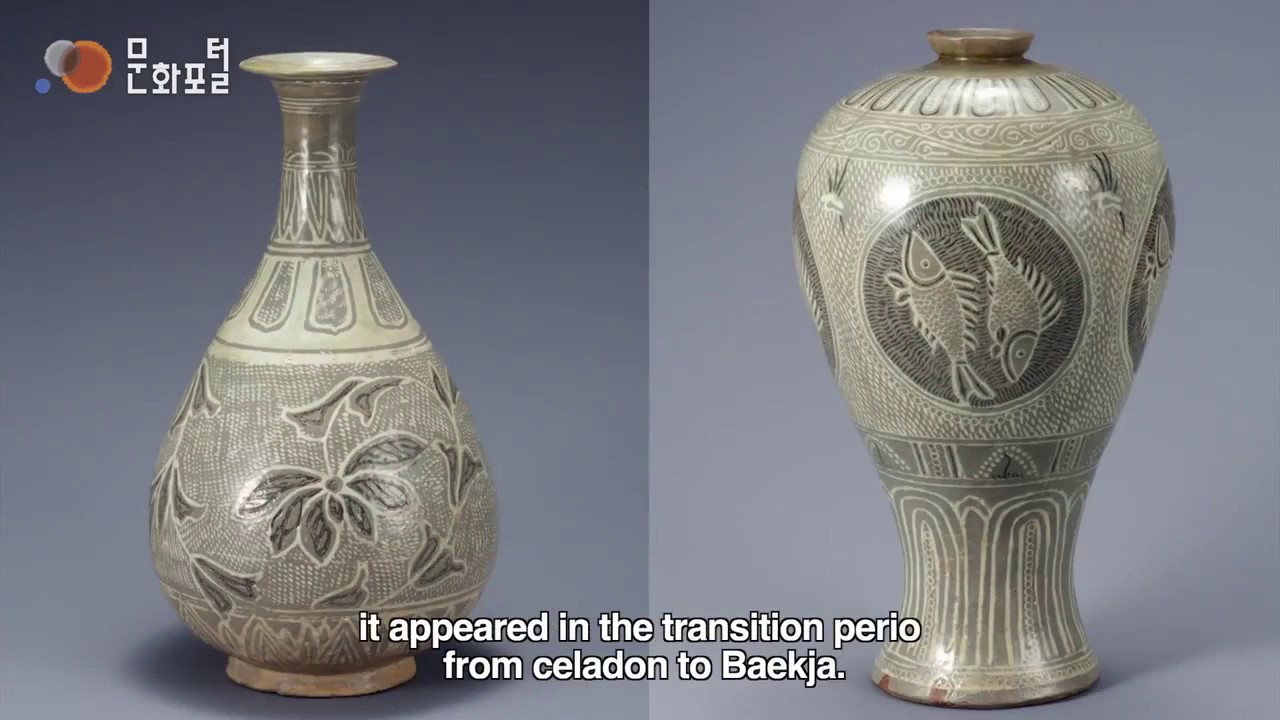
Korean Culture 100, Episode 63: The Baekja white porcelain story (YouTube)
Frequently Asked Questions About Joseon Baekja
What is Joseon Baekja?
Joseon Baekja (조선백자) is traditional Korean white porcelain produced during the Joseon Dynasty (1392–1897). Made from pure white clay fired at 1,300–1,350°C in a reduction kiln, it is defined by simplicity, purity, and an absence of unnecessary decoration — values rooted in Neo-Confucian philosophy.
What is a Moon Jar (달항아리)?
A Moon Jar is a large round Baekja vessel at least 40cm in height and width, shaped like a full moon. Made by joining two separately thrown half-spheres, each Moon Jar is inherently asymmetrical — slightly different from every angle. Fewer than 20 authentic Joseon Moon Jars exist worldwide, with seven designated South Korean National Treasures.
How is Baekja different from Chinese white porcelain?
Chinese white porcelain (such as Jingdezhen ware) typically features elaborate painted decoration — cobalt blue motifs, enamels, gilding. Korean Baekja, especially the pure white Sunbaekja (순백자), deliberately rejects decoration as a philosophical position. The beauty is in the form, the glaze, and the imperfections left by the hand and the kiln.
How is Baekja different from Japanese porcelain?
Japanese porcelain traditions (Arita, Imari, Nabeshima) typically feature rich decoration and a high degree of symmetrical precision. Korean Baekja accepts irregularity as a natural quality rather than making imperfection a deliberate aesthetic choice as in wabi-sabi. The result is quieter and less self-conscious.
What are the main types of Baekja decoration?
Pure white Sunbaekja (순백자) uses no colour but may have incised or relief patterns. Cheonghwa (청화백자) features underglaze cobalt blue designs. Cheolhwa (철화백자) uses underglaze iron for brown or black patterns. Jinsa (진사백자) applies copper oxide for red accents, appearing from the 18th century onward.
Where can I see Joseon Baekja in person?
Major collections include the National Museum of Korea (Seoul), the Leeum Samsung Museum of Art (Seoul), the Metropolitan Museum of Art (New York), the British Museum (London), and the Victoria & Albert Museum (London). In Australia, the Art Gallery of New South Wales and the National Gallery of Australia hold examples of Korean ceramics.
Where can I buy Korean ceramic homeware in Australia?
PEUM is a Melbourne-based Korean houseware brand bringing traditional Korean craft to Australian homes. Browse the collection at peum.com.au, with Australia-wide shipping.
Joseon Baekja offers something rare in design: the confidence to do less. In a world of maximalism and constant stimulation, a Moon Jar asks you to slow down, look carefully, and find what you need in simplicity. That is not an old idea. It is a very necessary one.