
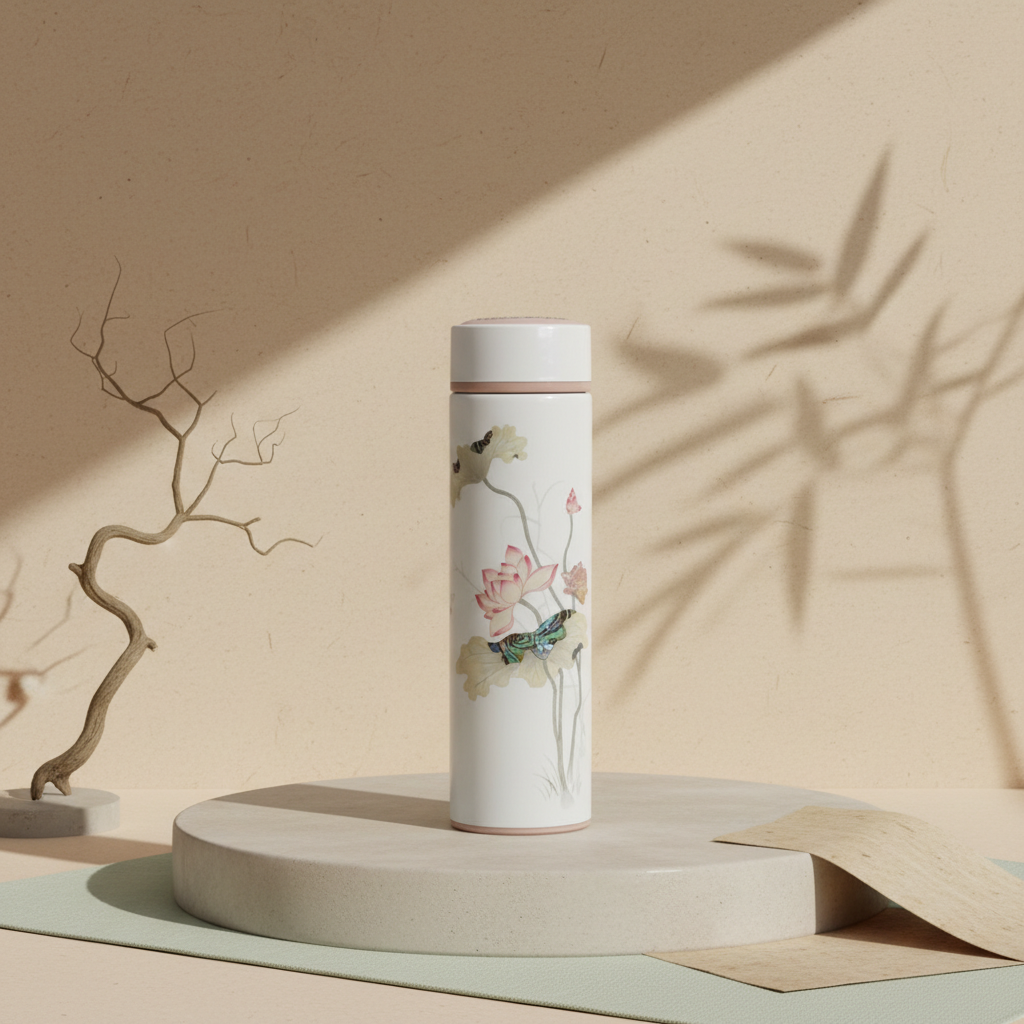
Jang-i Lotus (연꽃) White Mother of Pearl Tumbler (450ml)
Shaped with a maker's heart, it finds new meaning in your everyday.
A quiet piece of Korea, brought into life in Australia.
Specifications
Materials
Artisan Info
Care Instructions
Shipping & Returns
Ships directly from South Korea to Australia
Delivery 5–14 business days (incl. 1–3 days processing),
depending on destination & customs clearance
Made-to-Order Some items need up to 2 extra weeks
— noted on product page
Shipping Fees (shown in your local currency)
- Orders AUD 200 and over → Complimentary shipping 🎁
- Orders under AUD 200 → Flat rate AUD 30
📦 No PO Boxes or Parcel Lockers · Tracking emailed on dispatch
International orders may incur customs duties
It takes root in mud and rises to the surface without a trace of it. The lotus has always known something the rest of us are still working out.
Inspired by Hyang-won-ik-cheong — "the scent travels far and becomes clearer" — Jang-i's white Najeonchilgi tumbler carries the Yeonkkot lotus across a clean porcelain-white ground. Natural mother-of-pearl petals are hand-inlaid using the traditional Korean lacquerware technique, each fragment placed to catch the light differently at every angle. In Joseon aesthetics, white was not emptiness — it was the colour of the Baek-ui-minjok, the people who wore white as a declaration of peace and purity. The lotus on white is not decoration — it is a statement about the kind of clarity that remains when everything unnecessary has been cleared away.
On a pale timber desk or linen-toned surface, the white exterior sits with a natural ease that darker finishes cannot achieve in bright interiors. Carried as a morning companion filled with green tea or warm water, it is held with the particular steadiness the lotus motif suggests. Given to mark a new beginning — a new role, a new home, a return to something the recipient had set aside — it arrives as an object with the right kind of meaning. PEUM does not bring this to Australia as an interpretation of Korean artisan craft — this is the original tradition, made by its practitioners, offered as it is.
Double-walled, vacuum-insulated, and certified free from heavy metals. For those who prefer that the objects they carry mean something. Handcrafted in South Korea — offered without dilution.
Thank you for visiting PEUM.
At PEUM, we’re passionate about sharing the beauty and soul of Korean artisan craftsmanship with the world.
Each item is thoughtfully handled and carefully packed by hands that respect the story behind every piece so that it reaches your home just as it was meant to be.
We’re a small, independent team that believes in doing things properly with care, with purpose, and with heart.
No shortcuts, no compromises
just genuine dedication to bringing you something special, the way it deserves to be delivered.
With warmth,
PEUM을 찾아주셔서 진심으로 감사드립니다.