
Why Korean Ceramics? A Guide to Korean Craft Tradition and How to Style It at Home
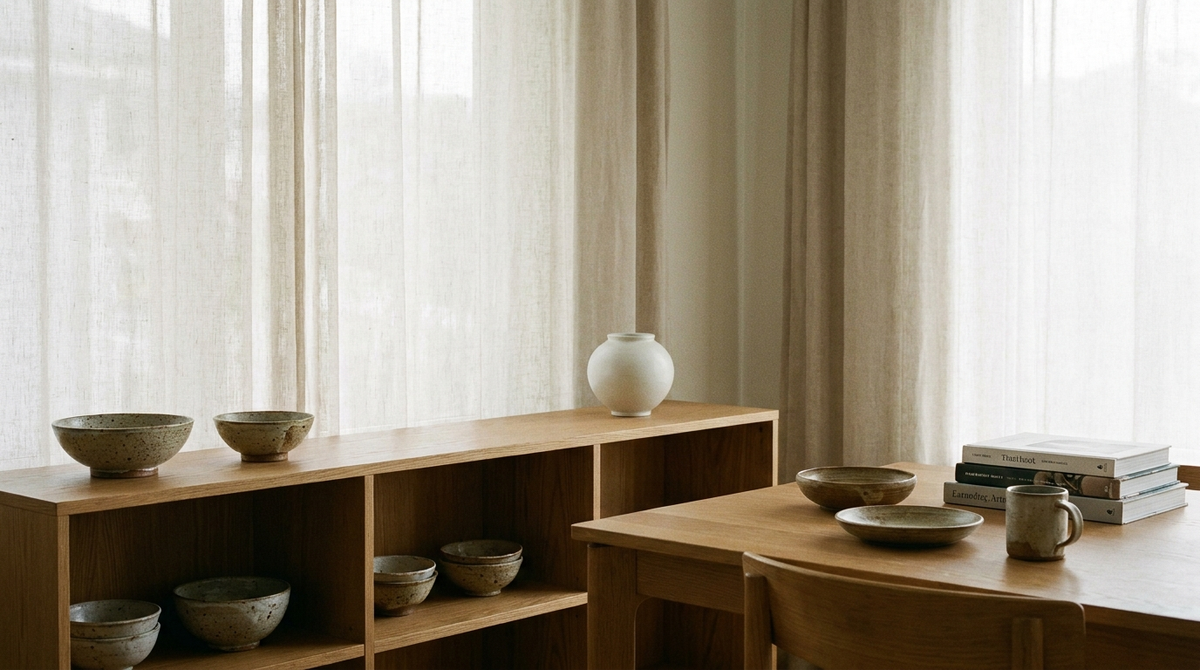
Korean ceramics are among the most quietly authoritative objects in the world. Not because they demand attention — precisely because they don't. This guide covers where they come from, what makes them different, and how to bring them into a contemporary home without overthinking it.
The Korean Ceramic Tradition
Korean ceramics have been made continuously for over a thousand years, but two traditions define the craft above all others. The first is Cheongja (청자) — celadon — developed during the Goryeo dynasty (918–1392) and considered among the finest glazework ever produced anywhere in the world. Korean celadon is distinguished by its jade-green tone, achieved through a precise combination of iron-rich clay and reduction firing. The Chinese originated celadon, but Korean potters refined it into something distinct: cooler, quieter, more restrained.
The second tradition is Baekja (백자) — white porcelain — which became the defining ceramic form of the Joseon dynasty (1392–1897). Where celadon was associated with the aristocracy, white porcelain emerged from a Confucian aesthetic of simplicity and moral clarity. No decoration. No excess. Only the form itself, finished in pure white. The Moon Jar (달항아리) — a large, imperfect sphere — is its most iconic expression: made by joining two half-spheres, never quite symmetrical, beautiful in exactly the way imperfection can be.
What separates Korean ceramic tradition from Japanese or Chinese equivalents is its relationship to restraint. Korean craft does not decorate beyond purpose. The glaze reveals the material; the form serves the function; the irregularities are accepted, not corrected. This is what Korean aesthetics call Bihyeong-ui Mi (비형의 미) — the beauty of asymmetry.
▶ Watch: Koryo Celadon Documentary

Koryo Celadon — An 83-year-old master potter creates ceramic vessels using techniques from the Goryeo Dynasty (YouTube)
What Makes Korean Ceramics Different
The short answer: origin. Much of what contemporary design culture calls "minimal" or "organic" or "artisanal" draws — often unconsciously — from Korean ceramic principles. The difference is that Korean craft didn't arrive at restraint as a trend. It was always there. When you bring a piece of Korean ceramics into your home, you are not buying into an aesthetic movement. You are buying the source.
Modern Korean ceramics like the pieces at PEUM continue this lineage. They are made using traditional raw materials — fired at high temperatures, finished with glazes free from harmful substances, built for daily use but considered enough to sit on a shelf and earn their place. They bridge Eastern and Western sensibility not by compromising either, but by being fully themselves.
▶ Watch: Making a Korean Celadon Vessel
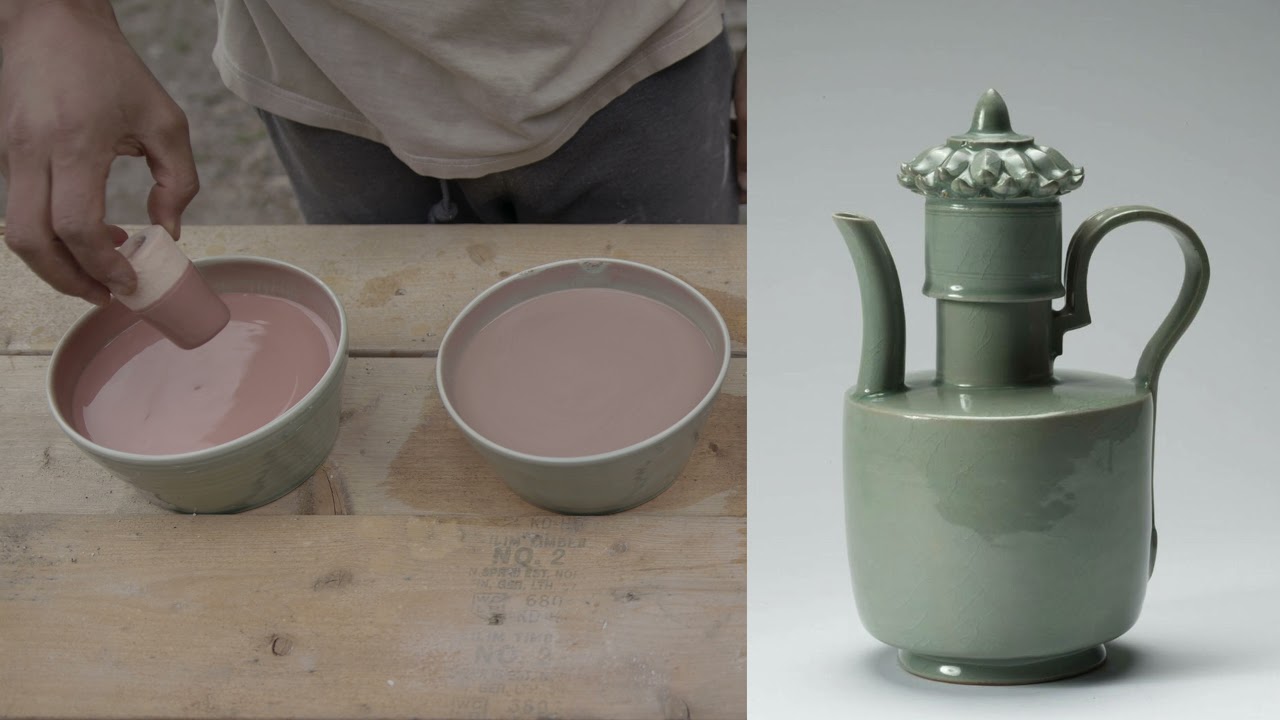
Artist commentary: recreating a Goryeo-dynasty celadon ewer using traditional techniques (YouTube)
How to Style Korean Homeware at Home
The single most useful rule: let the object have space. Korean ceramics are not decorative in the conventional sense — they don't need to be grouped or layered to work. One piece, given room to breathe, does more than a shelf of objects competing for attention.
For tableware, pair with undyed linen, raw timber, or matte stone. Avoid busy table settings — the glaze and form are the detail. A celadon plate with a single seasonal ingredient at its centre is a complete composition.
For shelving, a single ceramic vessel alongside one dried stem or a small stack of books is enough. The negative space around the object is part of the arrangement. Resist filling it.
Korean ceramics read well in both warm and cool interiors. Celadon tones (soft jade, mint, grey-green) anchor naturally against warm timber and linen. White porcelain works in almost any context — it simplifies everything around it.
▶ Watch: Art Escapes — Korean Ceramics

Art Escapes Ep. 3 — Why royal collectors have sought Korean ceramics for centuries, and what makes celadon so enduringly desirable (YouTube)
Frequently Asked Questions
What is Korean celadon (Cheongja)?
Cheongja (청자) is a jade-green glazed ceramic developed in Korea during the Goryeo dynasty. The glaze is produced through iron-rich clay fired in a reduction kiln, creating its distinctive cool green tone. Korean celadon is considered among the finest ceramic traditions in the world and predates most contemporary design aesthetics that have borrowed from it.
How is Korean ceramics different from Japanese ceramics?
Korean and Japanese ceramic traditions share some historical overlap, but differ fundamentally in aesthetic philosophy. Japanese ceramics — particularly in the wabi-sabi tradition — embrace imperfection as deliberate artistic choice. Korean ceramics accept imperfection as a natural consequence of the hand and the kiln, without making it the subject. The result is quieter, less self-conscious, and often more versatile in a contemporary home.
Are Korean ceramics food safe and dishwasher safe?
High-fired Korean ceramics made with traditional materials are food safe, microwave safe, and dishwasher safe. All ceramics at PEUM are fired at high temperatures and made with pure raw materials free from harmful substances. Hand washing is recommended for long-term glaze care, but machine washing is safe for everyday use.
Is Korean pottery handmade? Will each piece look different?
Yes. Korean ceramic pieces are handmade, which means subtle variations in glaze tone, texture, and form are inherent to the process. No two pieces are exactly alike. These variations are not defects — they are the signature of the hand and the kiln, and are what distinguishes handmade ceramics from mass-produced tableware.
What is Bihyeong-ui Mi?
Bihyeong-ui Mi (비형의 미) is a Korean aesthetic concept meaning "the beauty of asymmetry" or "the beauty of imperfection." It describes the Korean craft tradition of accepting natural irregularities in handmade objects rather than correcting them. It is related to but distinct from the Japanese concept of wabi-sabi — where wabi-sabi aestheticises imperfection, Bihyeong-ui Mi simply accepts it as part of what the object is.
What room does Korean homeware suit best?
Korean ceramics work in any room, but they are most at home where simplicity is valued: dining tables, open shelving in kitchens, bathroom ledges, living room surfaces with natural light. They do not need a particular style of interior to work — they create their own atmosphere wherever they are placed.
Where can I buy Korean ceramics in Australia?
PEUM is a Melbourne-based Korean houseware brand that sources ceramics and homeware directly from Korean artisans and makers. All pieces are available online at peum.com.au with shipping across Australia.
Browse the PEUM collection of Korean ceramics and homeware at peum.com.au.